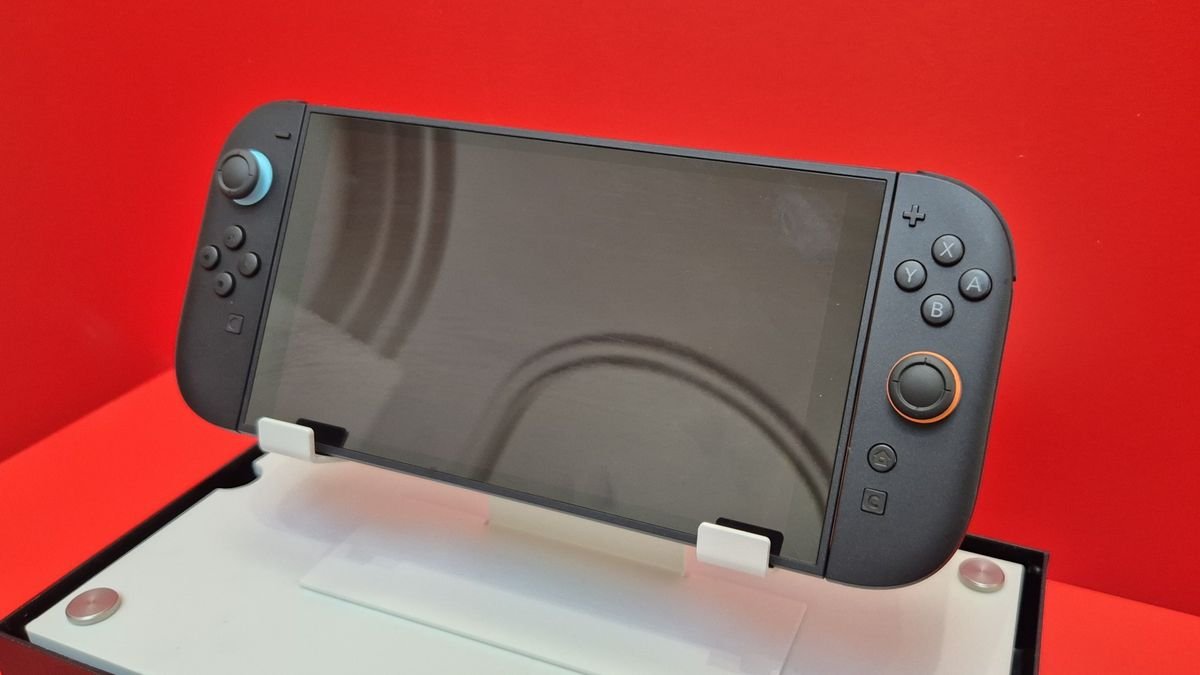
The chatter around the Nintendo Switch 2 isn't just about its shiny new features or the promise of next-gen Nintendo magic; it's also about a number that has sparked significant debate: the $450 price tag. Add to that first-party games potentially hitting $70 to $80, and many players are left wondering: is Nintendo asking too much, or is this simply the cost of gaming in 2024 and beyond?
This isn't just sticker shock; it's a deep dive into the underlying economics, strategic decisions, and historical context that Nintendo says justify these higher prices. Let's unpack whether the Nintendo Switch 2's price truly reflects its value.
At a Glance: What You Need to Know About Switch 2 Pricing
- Console Price: Nintendo announced the Switch 2 will launch at $450.
- Game Prices: First-party titles are expected to range from $70 to $80.
- Nintendo's Goal: Maintain hardware profit margins, unlike the Wii U, which sold at a loss.
- Key Justifications for Console: Upgraded hardware, new features (GameChat, mouse mode), and general economic inflation.
- Key Justifications for Games: Acknowledgment of long-stable game prices (since the 90s) and inflation catching up, plus a focus on per-game value rather than a blanket price hike.
- Economic Factors: Potential impact from Trump's tariffs (though Nintendo has pre-positioned inventory).
- Historical Context: The original Switch's $299 price in 2017 is roughly $391 in today's dollars.
The Console Conundrum: Why $450 for the Nintendo Switch 2?
When Nintendo of America President Doug Bowser unveiled the $450 price point for the Switch 2, it raised more than a few eyebrows. After all, the original Switch launched at a more wallet-friendly $299 back in 2017. So, what's behind this significant jump? Nintendo points to a confluence of factors, from upgraded internals to global economic realities.
Upgraded Hardware and Innovative Features Drive Costs
One of the primary drivers, according to Nintendo Vice President of Player & Product Experience Bill Trinen, is the upgraded hardware packed into the new console. While specific details remain under wraps, we can infer significant improvements are planned for the device's processing power, display technology, and overall build quality. These aren't minor tweaks; they represent a generational leap designed to deliver more immersive experiences and graphical fidelity.
Beyond raw power, Trinen also cited entirely new features, such as "GameChat" and a "mouse mode," as contributing to the increased cost. These aren't just quality-of-life improvements; they represent new technological integrations that expand the console's capabilities and potentially its appeal to a broader audience. Developing and integrating such innovative new features requires substantial R&D investment, which naturally flows into the final retail price.
The Echo of Inflation: Everything Costs More Now
Perhaps the most universally relatable justification is inflation. Trinen made a compelling point: the original Nintendo Switch's $299 price in 2017, when adjusted for inflation, would be approximately $391 in today's dollars. Viewed through this lens, the $450 price tag for the Switch 2 isn't as dramatic a leap as it first appears, especially considering the expected hardware upgrades.
Think about it: the cost of materials, manufacturing, shipping, and labor has risen across the board. From the semiconductor chips powering the device to the plastics encasing it, every component is more expensive than it was seven years ago. Nintendo, like any other company, has to factor these increased operational costs into its pricing strategy to maintain profitability.
Learning from the Past: Maintaining Hardware Margins
A critical piece of Nintendo's pricing puzzle comes from a valuable, albeit painful, lesson: the Wii U. That console was notoriously sold at a loss, a strategy that severely hampered Nintendo's ability to recover costs and invest in future projects. Doug Bowser explicitly stated that with the Switch 2, Nintendo aims to "maintain hardware margins."
This means they intend to make a profit on each console sold, rather than relying solely on software sales to recoup hardware losses. It’s a sound business strategy that ensures long-term financial health and allows for continuous investment in game development, research, and future innovations. While it means a higher upfront cost for consumers, it also indicates a more sustainable business model for Nintendo.
Navigating Global Economic Headwinds
Beyond general inflation, specific geopolitical factors are also at play. Bowser mentioned that potential tariffs, specifically "Trump's tariffs," could impact import costs from manufacturing hubs like Vietnam or China. While these tariffs create uncertainty, Nintendo has proactively built "global inventories," with some Switch 2 units already in the United States. This strategic move aims to "delay financial pain" from potential tariff hikes, but the underlying threat still contributes to overall pricing considerations. It's a reminder that global politics can have a direct impact on the price of your next console.
The Software Shift: Why $70-$80 for Switch 2 Games?
The console price isn't the only figure causing a stir. The announcement that first-party Nintendo Switch 2 games could retail for $70 to $80 has also caught players off guard. While other publishers like Sony and Microsoft have already embraced this price point for their latest generation titles, Nintendo's move is significant for a company traditionally known for its slightly more accessible pricing.
Inflation's Long Shadow: A Historical Perspective
Bill Trinen again points to inflation as a key factor here, making a compelling historical argument. He noted that video game prices have been remarkably stable for a long time. For example, Donkey Kong Country cost $59 when it launched in 1994. Adjust that 1994 price for inflation, and it aligns remarkably closely with an $80 price tag today.
It's easy to forget that the standard $50-$60 game price held for decades, even as development costs skyrocketed. Modern games involve massive teams, years of development, increasingly complex graphics, advanced physics, and extensive voice acting, all of which come with substantial price tags. The $70-$80 benchmark isn't an arbitrary hike but rather, according to Nintendo, an adjustment that brings game pricing in line with the true cost of game development in an inflationary environment.
Value-Based Pricing: Not a Blanket Benchmark
Crucially, Doug Bowser clarified that Nintendo is "not establishing a new pricing benchmark." Instead, they determine each game's price based on its "specific experience, length, volume, and depth." This is a value-based pricing model, meaning that a sprawling open-world adventure with hundreds of hours of content might justify an $80 price tag, while a shorter, more focused experience might still come in at $60 or $70.
This approach suggests that Nintendo wants to assure players that they'll get commensurate value for their money. It's an attempt to avoid the perception of a greedy across-the-board increase and instead tie the price to the tangible and intangible richness of the game itself. The anticipation around the upcoming game library will certainly test this justification.
Deconstructing the Value Proposition: Is the Switch 2 Worth It?
Ultimately, the question isn't just about what Nintendo charges, but what you, the consumer, perceive as fair value. Is the Nintendo Switch 2, with its $450 console and potentially $80 games, a worthwhile investment? This requires a look beyond the raw numbers.
The Technology Leap: More Than Just a Number
While Nintendo typically doesn't chase raw power like its competitors, the Switch 2 is expected to offer a significant technological leap over its predecessor. This likely means:
- Higher Resolution & Frame Rates: Games that look sharper and run smoother, both docked and in handheld mode.
- Faster Load Times: A more enjoyable experience with less waiting.
- Enhanced Connectivity: Improved Wi-Fi, Bluetooth, and potentially new port options.
- Better Display: Rumors of OLED or superior LCD technology for vibrant visuals on the go.
- New Interaction Modes: GameChat and mouse mode could open up entirely new gameplay possibilities and social interactions.
These upgrades aren't just cosmetic; they fundamentally enhance the gaming experience. For players who demand better performance and visual fidelity without sacrificing portability, these improvements could easily justify the higher price.
The Nintendo Ecosystem: Exclusives and Longevity
Nintendo's greatest asset has always been its exclusive first-party titles. Games like The Legend of Zelda, Super Mario, and Pokémon are cultural phenomena that consistently drive console sales. No other platform offers these experiences. The price of the console also buys you access to this unique library and its future additions.
Furthermore, Nintendo consoles often enjoy a longer lifespan than their competitors. The original Switch has been relevant for over seven years, consistently receiving new games and updates. If the Switch 2 follows a similar trajectory, the initial investment amortizes over a longer period, making it a more economical choice in the long run. The continued support for compatible accessories and cross-generational play can also add to this longevity.
Intangible Value: Joy, Innovation, and Community
Beyond specs and game libraries, there's an intangible "Nintendo magic." It's the unique blend of innovative gameplay, family-friendly experiences, and a vibrant community. For many, Nintendo consoles aren't just gaming machines; they're sources of joy, nostalgia, and shared experiences. This emotional connection, while hard to quantify, certainly contributes to the perceived value.
Comparing to the Market: Where Does Switch 2 Stand?
To put the Nintendo Switch 2's pricing in perspective, it's helpful to glance at the broader console market:
- PlayStation 5 and Xbox Series X: These consoles launched at $499, offering cutting-edge graphics and processing power for traditional home console gaming. The Switch 2's $450 price point places it just slightly below these powerhouses, which is significant considering its unique hybrid form factor and Nintendo's usual market positioning.
- PC Gaming: While PC gaming offers unparalleled flexibility and performance, the entry cost for a high-end gaming PC can easily run into thousands of dollars, making a dedicated console a more budget-friendly option for many.
- Handhelds: In the dedicated handheld space, devices like the Steam Deck and ROG Ally typically range from $400-$700+, depending on specifications, highlighting the premium nature of portable gaming hardware.
The Switch 2 occupies a unique niche, blending home console and handheld experiences. Its price reflects this duality, placing it in a competitive but distinct position. It's not aiming to be the most powerful, but to offer the most compelling hybrid experience at a premium price point.
The "Inflation Tax" on Gaming: A Deeper Look
The idea of inflation impacting gaming might seem abstract, but it's very real. Everything from raw materials to the salaries of talented developers has seen significant increases.
- Labor Costs: Game development teams have grown exponentially. A blockbuster title can involve hundreds, if not thousands, of artists, programmers, designers, writers, and musicians. Their salaries, benefits, and workplace resources all contribute to the final cost.
- Technology & Tools: Licensing advanced game engines, purchasing high-end development hardware, and subscribing to complex software tools are all substantial expenses.
- Marketing & Distribution: The cost of advertising a major game release globally, manufacturing physical copies (if applicable), and digital distribution fees also add up.
Given these escalating costs, maintaining 20-year-old game price points was simply unsustainable. The $70-$80 price for new games is less of a Nintendo-specific decision and more of an industry-wide adjustment to the actual economic landscape of game creation in the 21st century.
Common Questions & Misconceptions About Switch 2 Pricing
Let's tackle some frequently asked questions and clear up common misunderstandings:
Is Nintendo just being greedy?
Nintendo's explicit goal is to maintain hardware margins and avoid the financial pitfalls of the Wii U. While companies aim for profit, their justifications—inflation, R&D for new features, increased development costs—suggest a more complex scenario than simple "greed." It’s about balancing rising operational costs with market expectations.
Will older Switch games increase in price?
It's highly unlikely that existing Switch games will retroactively increase in price. This new pricing benchmark is typically for newly launched, next-generation titles. Older games will likely retain their current pricing, though sales and discounts will continue to occur.
Does this mean all future Nintendo games will be $80?
Not necessarily. Doug Bowser stated that prices would be determined by "specific experience, length, volume, and depth." This means a smaller, more focused title might still retail for less than a massive, sprawling adventure. It's a nuanced approach to pricing.
What about digital vs. physical game prices?
Traditionally, digital and physical versions of games launch at the same price. While digital often sees deeper discounts later on, the initial $70-$80 is expected to apply to both formats.
Will the original Switch drop significantly in price?
The launch of the Switch 2 will likely lead to some price adjustments for the original Switch models, especially as retailers clear inventory. However, Nintendo may keep existing models on the market as more budget-friendly alternatives, similar to how console generations often overlap.
Making Your Decision: Is the Switch 2 Worth Your Money?
Understanding Nintendo's justifications is one thing; deciding if the Switch 2's price aligns with your personal value is another. Here are some key considerations to help you make an informed choice:
- Your Budget: The most practical consideration. Can you comfortably afford the $450 console and potentially $70-$80 games, especially if you plan to buy multiple titles?
- Must-Have Games: Are there specific upcoming Nintendo Switch 2 titles that you absolutely cannot miss? If the release date aligns with a game you've been waiting for, it might push you towards an earlier purchase.
- Current Console Situation: Do you already own an original Switch? If so, consider whether the upgraded performance and innovative new features of the Switch 2 are compelling enough to justify an upgrade. If you don't own a Switch, the Switch 2 could be an excellent entry point into Nintendo's ecosystem.
- Gaming Habits: Are you primarily a portable gamer, a docked player, or a mix of both? The Switch 2's hybrid nature is its core strength. If you value versatility, its appeal grows.
- Long-Term Value: Do you typically invest in consoles for years? As discussed, Nintendo consoles often have long lifespans with consistent software support, which can make the initial investment more palatable over time.
- Patience Pays: If the price feels too high now, remember that console prices can sometimes see modest reductions a year or two post-launch, or bundles might offer better value. Waiting also allows for a larger game library to accumulate.
The question of whether the Nintendo Switch 2 is worth it truly boils down to a personal assessment of its features, its potential game library, and your own financial comfort. For a comprehensive look at this very question, explore our deeper analysis: Is the Nintendo Switch 2 worth it.
Final Thoughts: Beyond the Price Tag
The Nintendo Switch 2's pricing strategy is a complex interplay of technological advancements, inflationary pressures, and strategic business decisions aimed at ensuring Nintendo's long-term health. While the $450 console and $70-$80 game prices might cause initial hesitation, understanding the rationale behind them helps frame the discussion.
Ultimately, Nintendo is betting that the unique experiences, upgraded hardware, and the sheer "fun factor" that only they can deliver will continue to justify their premium. As consumers, our role is to weigh these justifications against our own expectations and budgets. The market, as always, will be the final judge of Nintendo's latest value proposition.