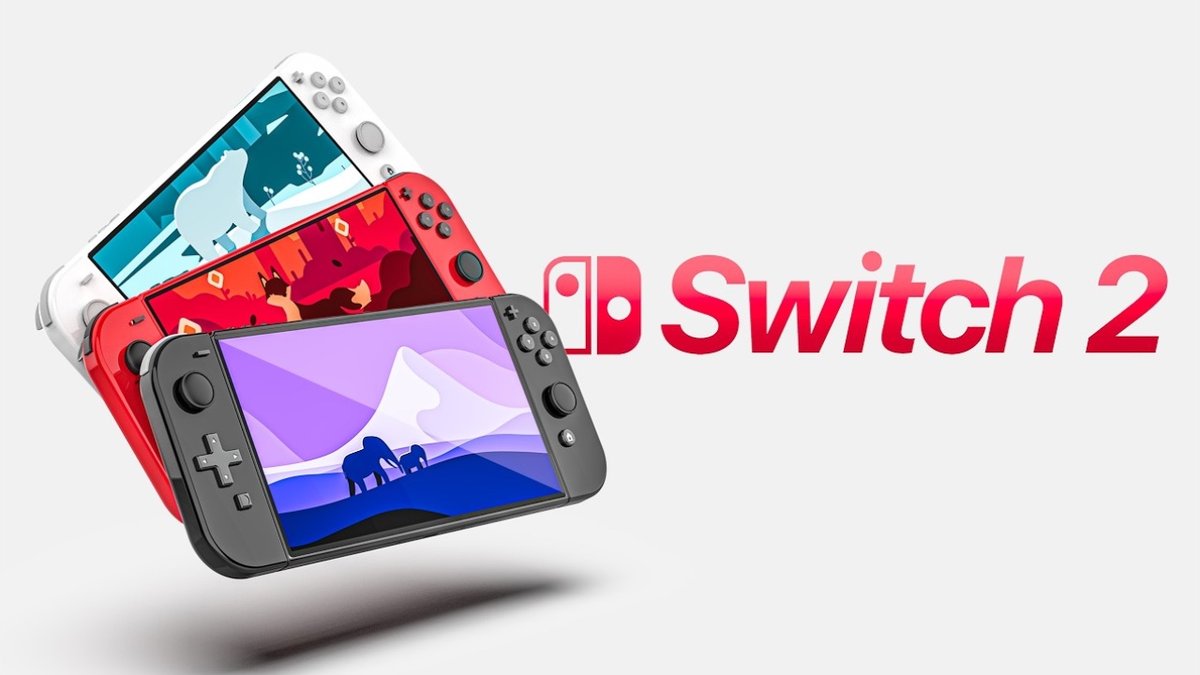
The next generation of Nintendo's beloved hybrid console is upon us, bringing with it a wave of anticipation and significant hardware upgrades. For anyone wondering about the precise Nintendo Switch 2 Specs & Features that set it apart, prepare for a deep dive into the technical advancements and quality-of-life improvements that promise to redefine portable and home console gaming for Nintendo fans. This isn't just an iterative update; it's a leap forward designed to enhance every aspect of your gaming experience.
At a Glance: What's New with the Nintendo Switch 2
- Bigger, Sharper Display: A 7.9-inch Full HD LCD with HDR10 and VRR up to 120 Hz.
- True 4K TV Output: Docked gaming at up to 4K/60fps or 1080p/1440p at 120fps with HDR10.
- Major Performance Boost: Custom Nvidia T239 processor with 1536 CUDA cores and DLSS support for advanced graphics.
- Redesigned Joy-Con 2: Magnetic attachment, improved sticks and buttons, and a unique mouse sensor feature.
- Faster, More Storage: 256 GB UFS internal storage (8x original Switch), expandable with new microSD Express cards.
- Enhanced Audio & Chat: Independent stereo speakers, 3D spatial sound, and a built-in mic for GameChat.
- Improved Design: More stable, adjustable kickstand and better connectivity options.
The Next Chapter for Gaming on the Go: Why the Switch 2 Matters
Nintendo has always carved its own path, prioritizing unique gameplay and accessibility over raw horsepower. With the Nintendo Switch 2, that philosophy continues, but with a substantial injection of cutting-edge technology. This isn't just about playing new games; it's about playing all your games – new and old – with greater fidelity, smoother performance, and a more immersive feel. The console is engineered to bridge the gap between dedicated handheld and traditional console gaming more seamlessly than ever before, inviting you to discover a direct comparison of the Switch 2 against its predecessor and see the improvements for yourself.
Unpacking the Display: A Visual Revolution
The first thing you'll likely notice about the Nintendo Switch 2 is its stunning new display. Moving away from the original's 6.2-inch screen (or the OLED's 7-inch), the Switch 2 boasts a generous 7.9-inch wide color gamut LCD capacitive touch screen. This isn't just bigger; it's significantly better.
In handheld and tabletop modes, you're looking at a crisp 1920x1080 pixels (Full HD). That's double the pixel count of the original Switch, meaning sharper images and finer details without sacrificing portability. But the upgrades don't stop there. The screen also supports HDR10 (High Dynamic Range), which significantly enhances the contrast between the brightest and darkest areas of the image, resulting in a more vivid, lifelike display. You'll see deeper blacks and brighter whites, making game worlds truly pop.
For buttery-smooth gameplay, the display features VRR (Variable Refresh Rate) technology, capable of refreshing up to 120 Hz. This actively prevents frame skips and flickering, especially crucial in fast-paced action games, ensuring a seamless visual experience whether you're battling Bowser or exploring Hyrule.
TV Output: True Console-Level Fidelity
When you dock your Nintendo Switch 2, the visual upgrades extend to your big screen. The system connects to a TV via a new dedicated dock, which itself includes a built-in cooling fan to maintain optimal performance during extended gaming sessions. This new dock supports a glorious 4K (3840x2160) resolution at 60 frames per second (fps), or you can opt for 1080p/1440p at a super-smooth 120 fps. HDR10 support is also carried over to TV output, ensuring your games look incredible on compatible televisions.
The dock also integrates Consumer Electronics Control (CEC) for automatic TV control and ALLM (Auto Low Latency Mode), which automatically switches compatible TVs to their game mode, minimizing input lag and delivering a more responsive experience without you having to dig through TV settings.
The Engine Under the Hood: Powering Next-Gen Experiences
The heart of any modern console is its processor, and the Nintendo Switch 2 features a significant upgrade here. It's powered by a custom-designed Nvidia T239 processor, a formidable chip that redefines what a Nintendo console can achieve.
The CPU section features 8x ARM Cortex A78C cores, with 6 of these available for game developers to tap into, ensuring plenty of processing muscle for complex game logic and AI. The real showstopper, however, is the GPU. It's an Ampere-based unit with 1536 CUDA Cores �� a massive jump from the original Switch's 256. This leap in graphical processing power is staggering; Nvidia itself claims up to "10x the graphics performance" compared to the original Switch.
To feed this powerful GPU, the system utilizes high-speed 128-bit/LPDDR5 memory, providing up to an impressive 102GB/s bandwidth when docked. A generous 9GB of this memory is available for games, allowing for larger textures, more detailed environments, and more complex game states than ever before. This level of performance positions the Switch 2 much closer to its dedicated console counterparts, even inviting a closer look at how DLSS actually works to boost performance on such hardware.
Advanced Graphics Magic: Beyond Raw Power
Beyond raw teraflops, the Nintendo Switch 2 leverages sophisticated graphics technologies to deliver its stunning visuals:
- DLSS Upscaling: This game-changing Nvidia technology (Deep Learning Super Sampling) uses AI to render games at a lower internal resolution and then intelligently upscales them to a higher resolution, often 4K, with incredible fidelity. This means games can look sharper and run faster than their native rendering resolution would suggest, effectively pushing the Switch 2's output capabilities far beyond what its raw horsepower might imply.
- Ray Tracing: For the first time on a Nintendo console, the Switch 2 supports hardware-accelerated ray tracing. This advanced rendering technique simulates the physical behavior of light, resulting in incredibly realistic reflections, shadows, and global illumination, bringing a new level of visual immersion to compatible games.
- VRR (Variable Refresh Rate) with Nvidia G-SYNC: While VRR is supported on the built-in display, it also leverages Nvidia's G-SYNC technology. This synchronization between the GPU and display ensures tear-free, smooth gaming, adapting the refresh rate to the game's frame rate in real-time.
Joy-Con 2: Redesigned for Comfort and Innovation
The iconic Joy-Con controllers have received a substantial overhaul for the Switch 2, evolving into the Joy-Con 2. The most immediate improvement is their attachment method: they now connect and detach effortlessly via strong magnetic connectors, offering both security and convenience.
Beyond the new attachment, the controllers boast several ergonomic and functional enhancements:
- Larger, Smoother Left/Right Sticks: Designed for enhanced precision and durability, with reduced noise during use.
- Longer L/R Buttons: More comfortable for extended play.
- Bigger SL/SR Buttons: Easier to press when holding a single Joy-Con horizontally.
- Streamlined Wrist Strap: Featuring a wider base for improved stability during motion-controlled games.
Perhaps the most innovative feature is the inclusion of a mouse sensor in each Joy-Con 2 controller. This allows them to function as a mouse on surfaces in compatible games, even with both controllers simultaneously. Imagine new possibilities for cursor control in strategy games, menu navigation, or even creative applications. Furthermore, the controllers integrate HD Rumble 2, an enhanced force feedback technology that delivers even more detailed and nuanced tactile sensations, immersing you deeper into the game world with every action. You might even find yourself looking for compatible accessories for the new Joy-Cons to fully leverage these new capabilities.
Storage and Connectivity: More Room, Faster Access, Better Connections
In an era of ever-expanding game sizes, storage is paramount. The Nintendo Switch 2 addresses this head-on, coming with a generous 256 GB of UFS internal storage. That's eight times the capacity of the original Switch, and UFS technology offers significantly faster read/write speeds, translating to quicker loading times and smoother gameplay.
For those who need even more space, storage is expandable up to a massive 2 TB, but with a crucial caveat: it requires the new microSD Express cards. These cards are essential for expanded storage and optimal game performance, leveraging faster speeds that older microSD cards simply can't match. While your existing microSD cards can still be used for screenshots and videos, they won't cut it for expanded game storage on the Switch 2.
Connectivity options are also robust:
- Wireless LAN (Wi-Fi 6): For faster, more stable online gaming and downloads.
- Bluetooth: For connecting a wide array of wireless accessories.
- Wired LAN Port: Built into the dock for the most stable internet connection in TV mode.
- Two USB-C ports: One on the bottom for charging and docking, and another conveniently placed on the top for accessories and additional charging options.
Immersive Audio: Hear Every Detail
A truly immersive gaming experience isn't just about visuals; sound plays a critical role. The Nintendo Switch 2 delivers crisp stereo sound via independent enclosure speakers, providing a richer, more powerful audio output directly from the console. For an even deeper dive into game worlds, it supports 3D spatial sound, creating a sense of depth and direction for audio cues that can truly enhance gameplay.
For multiplayer interactions, the system includes a built-in monaural microphone with noise/echo cancellation and auto gain control, ensuring clear voice chat during intense gaming sessions. This is especially useful for GameChat, a communication feature that allows for voice chat, screen sharing, and even video chat with friends (though video chat requires a separate Nintendo Switch 2 camera or compatible USB-C camera). When docked, Linear PCM 5.1ch audio output is supported via HDMI, providing high-quality surround sound for your home theater setup. This makes it easier to engage with the future of Nintendo's online services through crystal clear communication.
Thoughtful Design & Battery Life: Form Meets Function
Nintendo has also refined the physical design of the Switch 2. The console measures approximately 4.5 inches tall x 10.7 inches wide x 0.55 inches thick (with Joy-Con 2 controllers attached) and weighs around 1.18 lbs – maintaining its portability while accommodating the larger screen.
A welcome improvement is the new, large, and stable stand with a freely adjustable viewing angle up to 150 degrees. Say goodbye to flimsy kickstands; this design allows for a much more comfortable and versatile tabletop mode experience.
Powering all these advancements is a robust 5220mAh Lithium-ion battery. While game-dependent, this provides an estimated battery life of 2 to 6.5 hours, offering a good balance between performance and portability. Charging time is approximately 3 hours when the system is in Sleep mode.
The Big Picture: How the Switch 2 Stacks Up
Understanding the raw specs is one thing, but how does the Nintendo Switch 2 actually perform against its rivals and its predecessor?
- Vs. Original Switch: This is where the Switch 2 truly shines. The custom Nvidia T239 processor, with its more advanced CPU architecture and significantly more powerful Ampere GPU (1536 CUDA cores vs. 256), represents a monumental performance leap. Coupled with higher memory bandwidth, games will run smoother, look sharper, and load faster.
- Vs. PlayStation 5 / Xbox Series X: It's important to manage expectations. While the Switch 2 is a massive upgrade for Nintendo, it's still a hybrid console prioritizing portability. It will not match the sheer computational power of the PS5 or Xbox Series X, which are dedicated home consoles.
- Roughly Comparable to a "PS4 Pro+": A useful analogy for understanding its performance tier is that it's roughly comparable to a PlayStation 4 Pro, perhaps with a slight edge in some areas, hence "PS4 Pro+". This means it's capable of delivering visually impressive experiences, especially considering its form factor.
- Vs. Steam Deck: The Switch 2 shares similar power levels with Valve's Steam Deck. Its custom T239 CPU is reportedly slightly faster, though the Steam Deck has more memory overall. However, the Switch 2's ace in the hole is its DLSS upscaling technology, which allows it to push out impressive 4K visuals when docked, something the Steam Deck might struggle with in many demanding titles.
The performance enhancements – including smoother frame rates, sharper visuals, and faster loading times – will be game-dependent. New, exclusive titles like "Mario Kart World" will be built from the ground up to showcase these capabilities. Even some optimized original Nintendo Switch games may benefit from the more powerful hardware, potentially running at higher resolutions or more stable frame rates.
Game On! Compatibility and Ecosystem
The Nintendo Switch 2 aims for a seamless transition for existing players while opening doors to new experiences:
- Game Compatibility: You'll be able to play exciting new exclusive titles, such as the eagerly anticipated "Mario Kart World," designed to leverage the console's full potential. Crucially, the Switch 2 also supports a vast library of compatible physical and digital games from the original Nintendo Switch. However, it's worth noting that some older Switch games may not be fully supported or compatible, so it's always good to check for specific titles. This robust game library is one of the reasons many will consider the best Nintendo Switch 2 launch titles right from the start.
- Online Features: Access to online functionalities like GameChat (including voice chat, screen sharing, and video chat) will require internet access, a Nintendo Switch Online membership, and a Nintendo Account. For video chat specifically, you'll need a Nintendo Switch 2 camera or another compatible USB-C camera, which are sold separately.
- Play Modes: The system proudly retains the three versatile play modes that made the original Switch so popular: TV mode for home console gaming, tabletop mode with the improved kickstand for on-the-go multiplayer, and handheld mode for personal gaming wherever you are.
Navigating Your Upgrade Path: What You Need to Know
The Nintendo Switch 2 represents a significant leap forward, offering a more powerful, visually impressive, and feature-rich gaming experience. From its stunning Full HD HDR-capable handheld display to its 4K-ready TV output, bolstered by the custom Nvidia T239 processor with DLSS and ray tracing, this console is ready to tackle modern gaming demands. The revamped Joy-Con 2 controllers, expanded storage, and enhanced connectivity round out a truly compelling package.
For existing Switch owners, the allure of superior graphics, faster load times, and innovative new controller features will be strong. For newcomers, the Switch 2 offers a fantastic entry point into Nintendo's unique ecosystem with the power to truly impress. Ultimately, whether this next-generation console is the right fit for you will depend on your personal gaming habits and priorities. To help you weigh your options, consider exploring if the Switch 2 is worth buying based on these exciting advancements.